
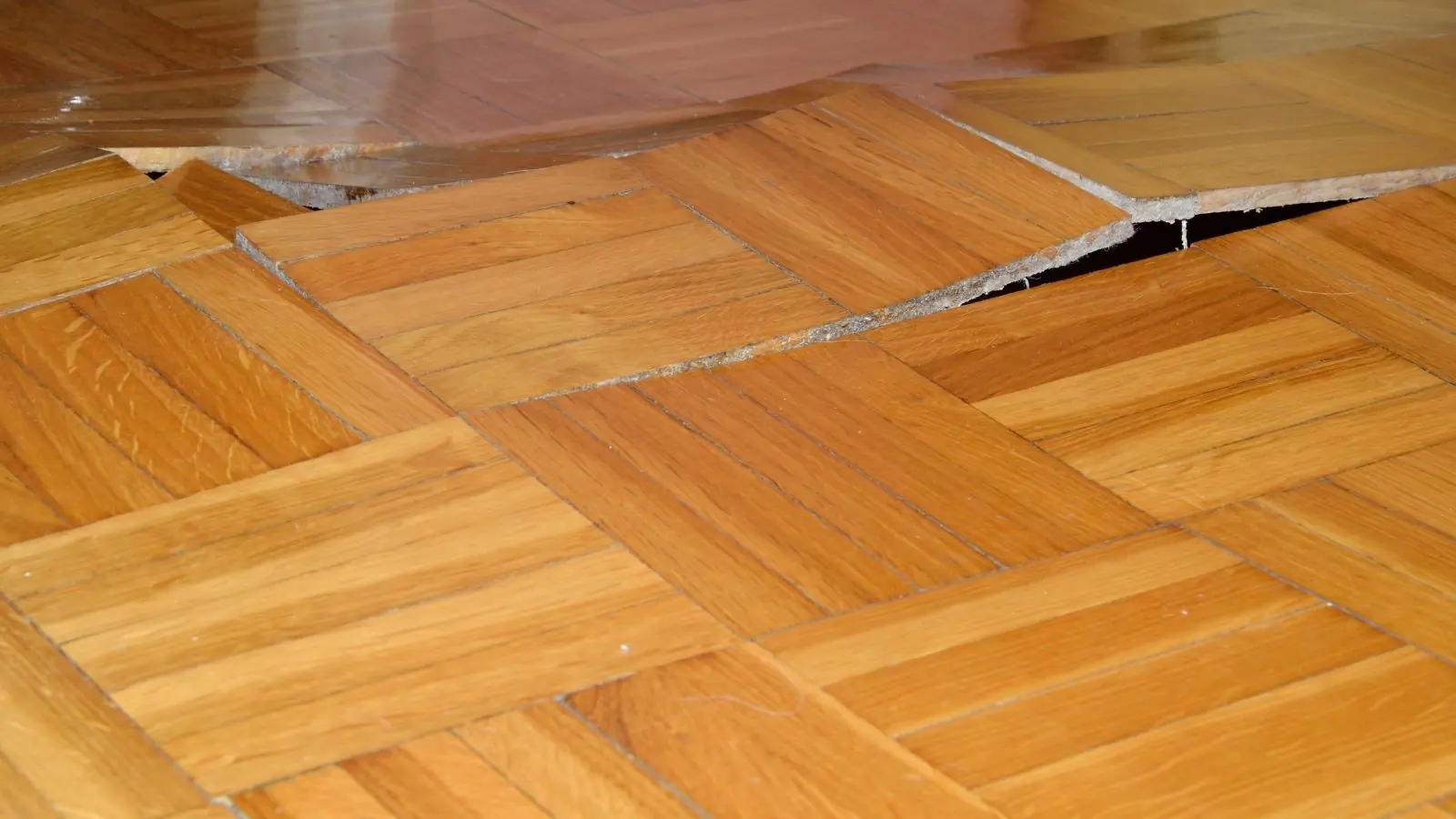
Hardwood drinks water from underneath
Hardwood floor water damage repair is the drying and restoration of wood flooring after a leak or flood. Boards absorb moisture from the edges and the underside, swell and then cup or buckle. In Libertyville, hardwood is common in older homes and newer open plans, so a leak under a sink or beside a dishwasher often reaches it.
Call (847) 368-7353 early. Boards that are dried within a day or two have the best chance of settling flat.
Cupping, crowning and buckling
Cupping
Board edges rise higher than the center because the underside is wetter.
Crowning
The center of the board rises, often after sanding a cupped floor too early.
Buckling
Boards lift from the subfloor, a sign of severe moisture.
Staining
Black or gray marks signal prolonged wetness or tannin reaction.
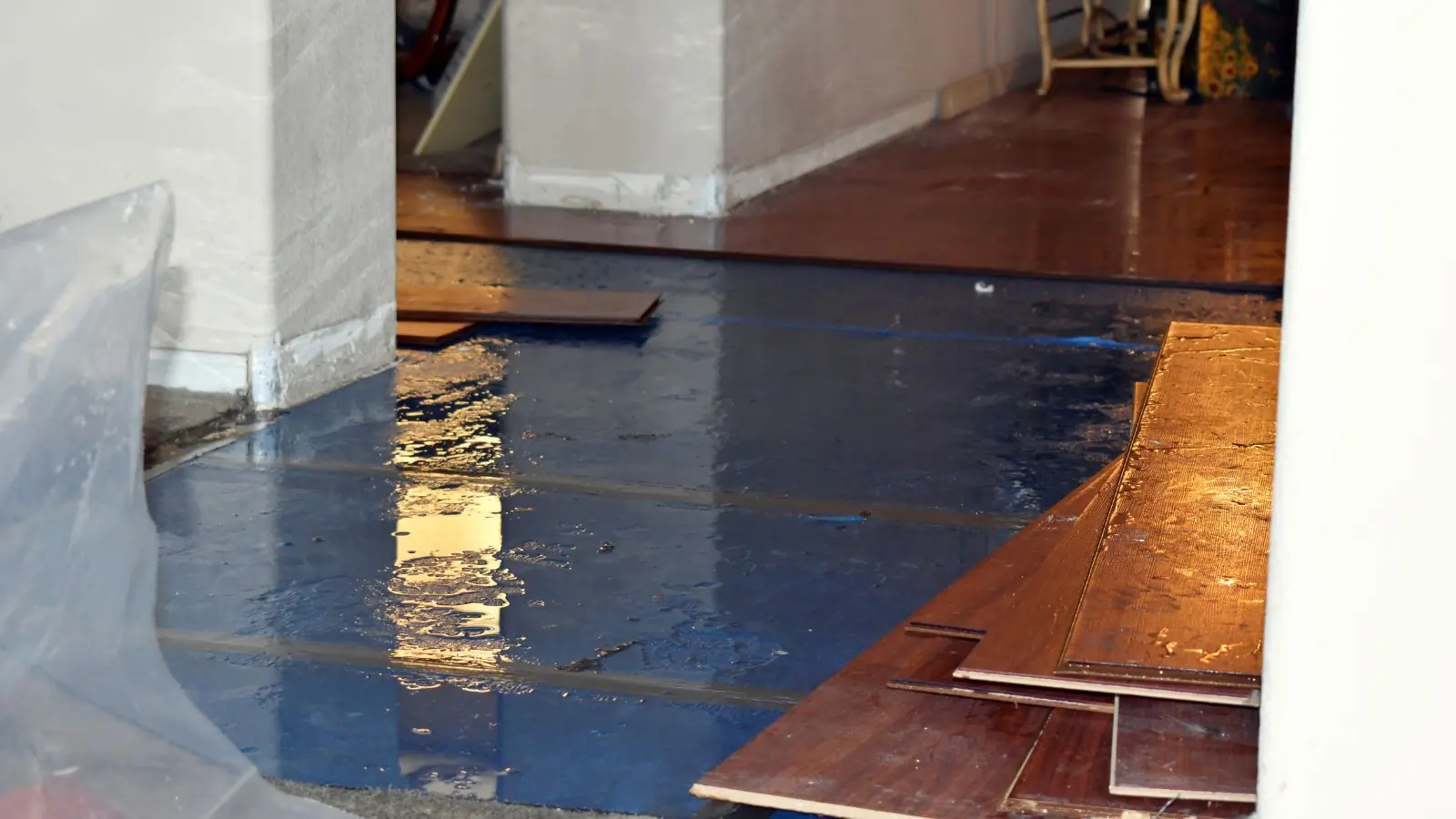
What decides whether boards can be saved
- How long the floor stayed wet.
- Whether the water was clean or contaminated.
- Species and thickness of the boards.
- Subfloor type and moisture content.
- Finish, since sealed edges slow absorption.
- Whether boards were glued, nailed or floating.
A sewage or flood source changes the answer. See flood damage cleanup.
How we dry a wood floor
Map moisture
We take readings on boards and subfloor at a grid of points.
Extract surface water
Water on and between boards is removed quickly.
Dry with mats
Floor drying mats pull moisture through the subfloor under controlled vacuum.
Dehumidify
Dehumidifiers and gentle airflow bring the room to a safe humidity.
Wait and flatten
Boards need time to acclimate before sanding.
Refinish, replace or relay
| Option | Works for | Limit |
|---|---|---|
| Sand and refinish. | Mild cupping that settles flat. | Do not sand before moisture equalizes. |
| Replace damaged boards. | Localized staining or buckling. | Needs color and finish blending. |
| Replace section. | Large wet area or wet subfloor. | Needs a visible transition. |
| Replace the floor. | Widespread damage. | Higher cost, best finish. |
Kitchens often sit beside hardwood, so see our kitchen water damage page too.
Costs and timelines
- Square footage of affected floor.
- Species and installation method.
- Drying time and equipment.
- Refinishing or replacement scope.
- Furniture moving and protection.
We scope drying and repair separately so you can compare with your insurer.
Insurance and hardwood claims
Sudden leaks are often covered, while slow leaks and humidity are not. Photograph cupping and staining, note the source and date, and keep our moisture records. Do not sand before the floor is dry, since early sanding can ruin a recoverable floor.
Solid, engineered and floating floors react differently
| Floor type | Typical response | Recovery outlook |
|---|---|---|
| Solid hardwood. | Cups or crowns as boards absorb water. | Often recovers if dried slowly and early. |
| Engineered hardwood. | Layers can delaminate and edges swell. | Less forgiving, often replaced if wet long. |
| Floating laminate. | Seams swell and do not recover. | Usually replaced. |
| Glued down parquet. | Adhesive fails and blocks lift. | Often replaced in sections. |
The type of floor shapes the plan, so tell us what you have when you call. Photos of the underside or the edge at a vent help us decide quickly.
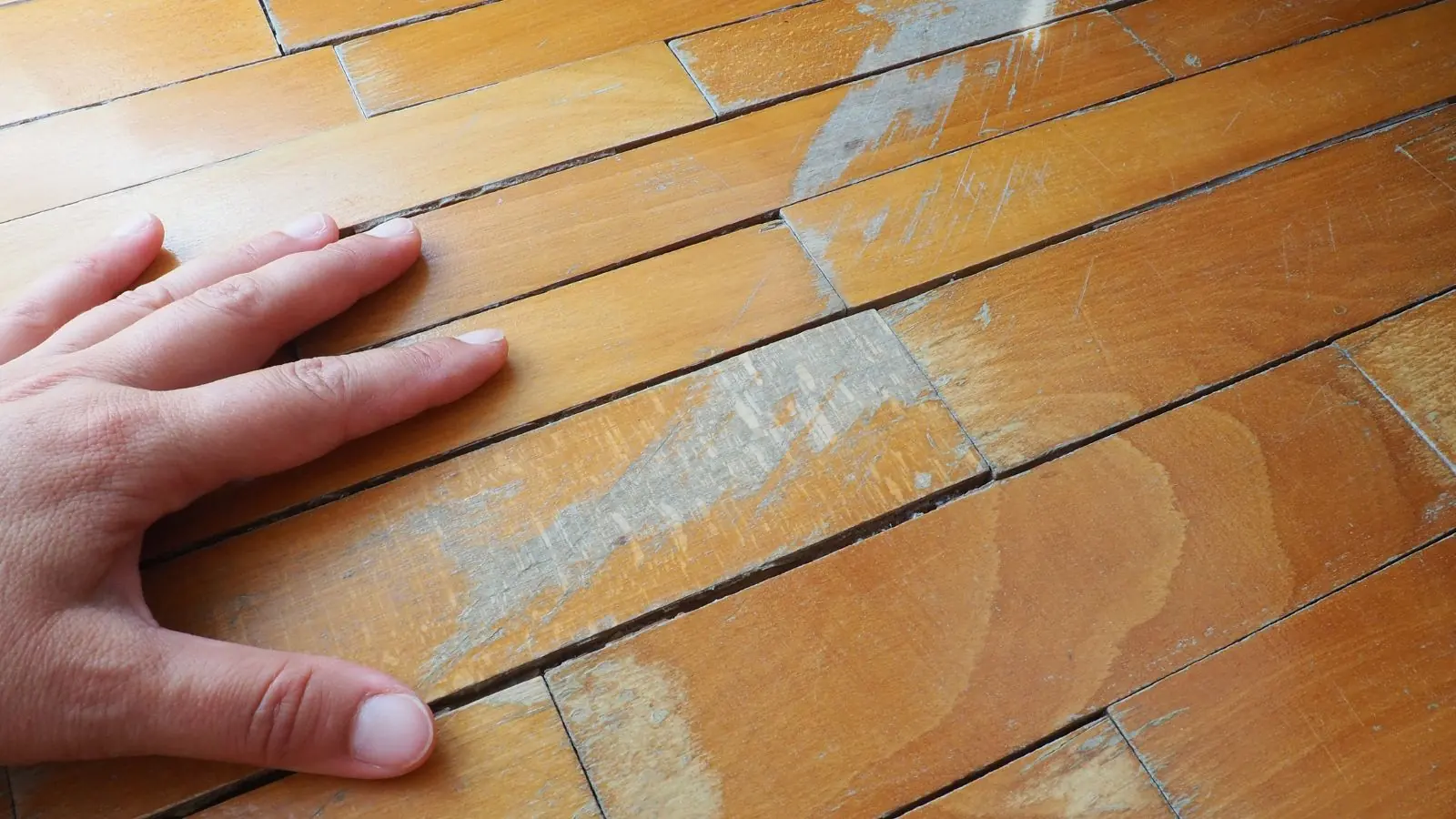
A realistic recovery timeline
Drying a wood floor is slow on purpose. The first days focus on removing surface water and starting controlled drying. The next days or weeks let the boards equalize with the room. Only then do we judge cupping, plan sanding and refinish. Rushing the process tends to crack boards or leave a crowned surface that must be fixed twice.
If boards were wet from a cabinet leak, our kitchen water damage page shows how the area under the cabinets is handled.
Protecting a hardwood floor in the first hour
Mop standing water up quickly and lift rugs and furniture off the floor. Put foil or plastic under furniture legs to keep stains from moving. Do not cover wet wood with a plastic sheet, which traps moisture. Open windows only if outdoor air is drier than indoor air, and call for a moisture check as soon as you can.
The standard behind the drying plan
Industry reference: the IICRC S500 standard is the published reference for professional water damage restoration. It defines water categories and drying classes, which is why a good scope names both and why moisture readings, not guesses, decide when drying is finished.
What to do before help arrives
These steps apply to most wet-area losses. If you smell gas, see sparking or hear buzzing from wet outlets, leave the area and call emergency services first.
- Turn off power to wet circuits at the breaker only if the panel is dry and you can reach it safely.
- Stay out of rooms with standing water if outlets, cords or appliances are submerged.
- Stop the water source if you can do it safely, then move valuables up and out of the wet area.
- Take dated photos and video before anything is moved.
- Do not use a household vacuum on standing water or run fans through wet electrical cords.
- Keep children and pets out of the wet area until the crew gives guidance.
Questions we hear
Can cupped hardwood go back to normal?
Often yes, if it is dried quickly and given time. Some boards stay deformed and need replacement.
How long before I can sand?
Wait until moisture readings are stable and matched to dry reference, often several weeks.
Do I need to pull the boards?
Sometimes a few boards are removed to dry the subfloor. We try to keep the floor intact where possible.
Does a dehumidifier help hardwood?
Yes, as part of controlled drying. Rapid, hot drying can crack boards.
Is floor drying noisy?
Mats and pumps hum. Most customers adjust quickly.
What if the water was contaminated?
Contaminated water usually means replacing affected boards. See our sewage page.