
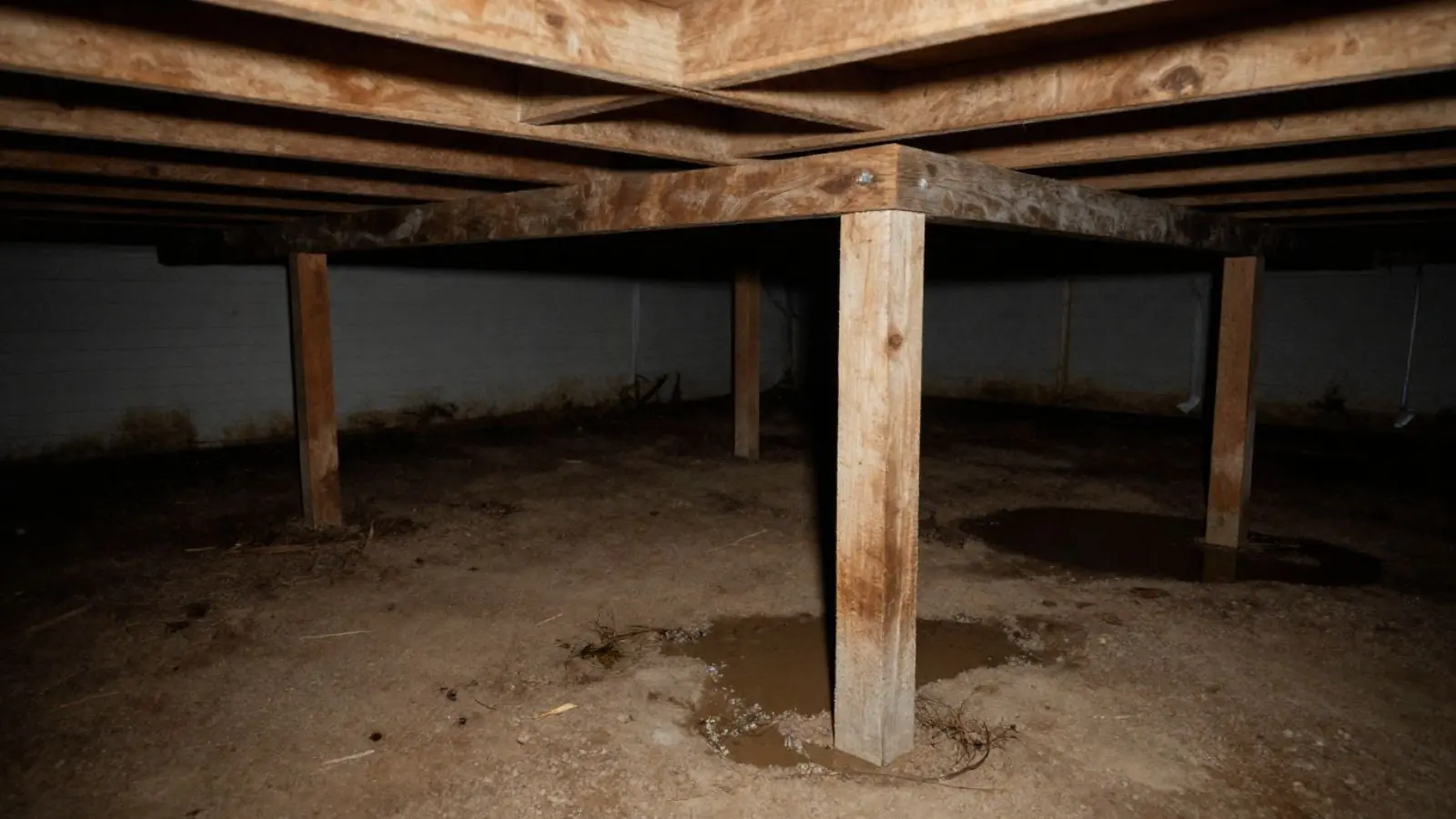
Water under the house stays hidden for months
Crawl space water damage is moisture, standing water or humidity that has soaked the dirt floor, insulation, joists and subfloor in the low space under a house. In Libertyville, crawl spaces are less common than basements, but they do exist under additions, older porches and some ranch homes. When they flood, the wet air rises into the living space.
Call (847) 368-7353 if you see water, smell dampness upstairs or notice a soft floor above a crawl space.
What brings water under a house
Surface runoff
Grading that slopes toward the foundation or downspouts that discharge near the wall send water into the vents and seams.
Plumbing leaks
Supply and drain lines run overhead. A small leak drips onto insulation for weeks.
High groundwater
Seasonal water tables raise moisture through a dirt floor.
Condensation
Humid air meeting cool surfaces drips onto joists and ducts.
If the water came from a plumbing failure, our burst pipe page explains how that is handled.
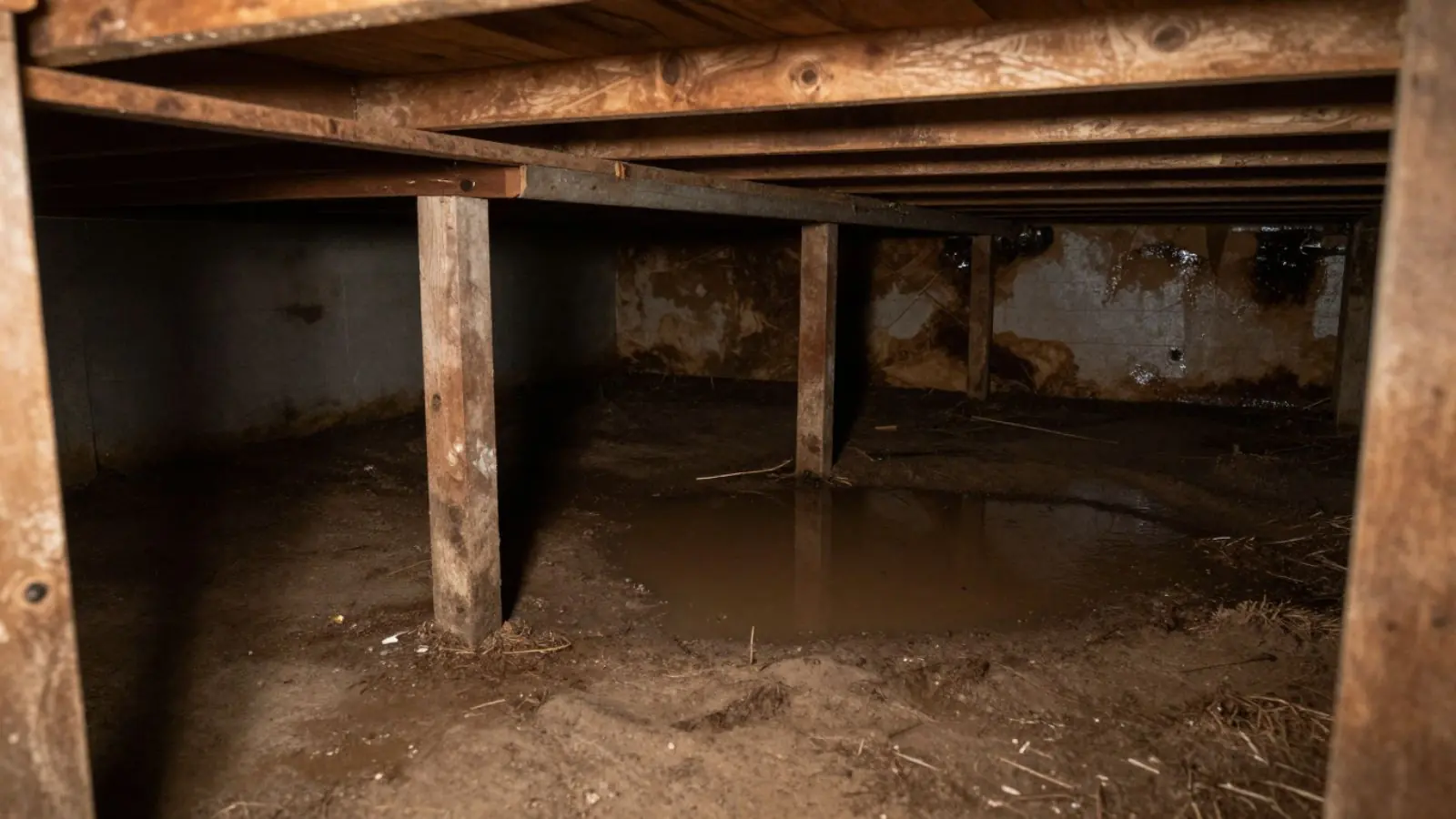
Symptoms you can notice from upstairs
- Floors that feel cold, spongy or uneven over the crawl space.
- Musty odor that gets worse in humid weather.
- Cupped hardwood above the space, see our hardwood floor page
- Increased pests or insects.
- Visible water or mud when you open the access hatch.
- Condensation on ducts and pipes.
Never enter a flooded crawl space yourself. Standing water near wiring is dangerous, and tight space adds hazard.
How we treat a wet crawl space
Assess safely
We check the entry, the electrical hazards and the depth with protective gear.
Pump and extract
Submersible pumps remove standing water. Wet insulation is removed.
Dry
Air movers and dehumidifiers dry joists and the subfloor. We check moisture in the framing and the floor above.
Clean and treat
Surfaces are cleaned and, if needed, treated for mold.
Recommend prevention
Drainage, vapor barriers and sump systems are discussed with the right contractors.
Prevention choices compared
| Option | What it does | Limit |
|---|---|---|
| Grading and downspout extensions. | Moves roof and yard water away. | Needs correct slope all around. |
| Vapor barrier. | Covers the soil and limits evaporation. | Needs sealed seams and edges. |
| Sump pump. | Removes water that gets in. | Needs power and a backup. |
| Dehumidifier. | Controls humid air. | Needs a drain and maintenance. |
For long wet periods, see mold remediation.
What affects crawl space costs
- Depth of water and ease of access.
- Amount of insulation and debris to remove.
- Number of drying days.
- Whether mold treatment is required.
- Any related repair, such as vapor barrier or sump work, handled by other trades.
Insurance and crawl space moisture
Groundwater and seepage are commonly excluded from standard policies, while a sudden plumbing break is often covered. Document the cause, take photographs and ask your agent before cleanup. We provide readings and written scope to help the conversation.
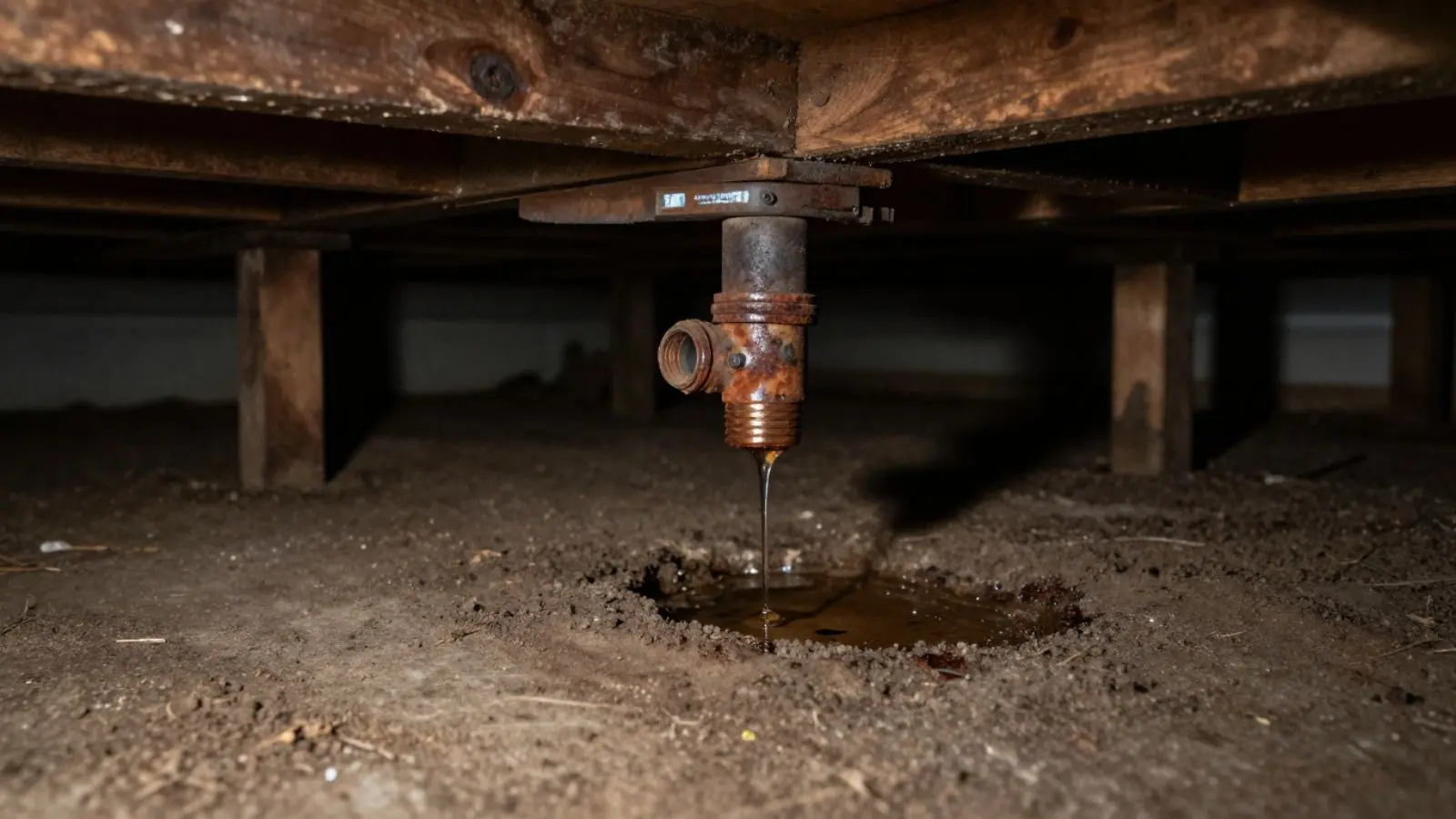
What is different when the work is under the floor
Crawl spaces are cramped, dark and often hold wiring, ducts and plumbing. Crews bring lights, protective gear and ventilation, and they check for electrical hazards before they pump. Standing water below a house is also a sign that the cause may be outside, so we note grading, downspouts and vents as we go.
After pumping, we remove wet insulation and any debris, then dry the joists and subfloor. If a vapor barrier is damaged, we tell you what we find and leave the replacement to a specialist.
When a plumber, a waterproofing contractor and a restorer all show up
Wet crawl spaces often need three kinds of help. The plumber fixes any pipe leak. The waterproofing contractor addresses grading, drainage and vapor control. We remove the water and dry the structure. Coordinating them in the right order avoids drying a space that will flood again next week.
What to do before help arrives
These steps apply to most wet-area losses. If you smell gas, see sparking or hear buzzing from wet outlets, leave the area and call emergency services first.
- Turn off power to wet circuits at the breaker only if the panel is dry and you can reach it safely.
- Stay out of rooms with standing water if outlets, cords or appliances are submerged.
- Stop the water source if you can do it safely, then move valuables up and out of the wet area.
- Take dated photos and video before anything is moved.
- Do not use a household vacuum on standing water or run fans through wet electrical cords.
- Keep children and pets out of the wet area until the crew gives guidance.
Questions we hear
Is a damp crawl space a real problem?
It can be. Constant moisture damages joists, invites pests and pushes humid air into the house. Drying and fixing the cause protects both.
Can I go in and look?
Only if the area is dry and safe. Standing water near wiring is dangerous. Let a trained crew check it first.
How do I stop the water from returning?
Fix the source first, such as grading, gutters or a plumbing leak. Then consider a vapor barrier, a sump pump or a dehumidifier.
Do you remove insulation?
Wet fiberglass or batts that have sagged are usually removed. Dry insulation can stay.
How long will drying take?
Several days is typical, longer when the space is large or very damp. We use meters on the framing to confirm dryness.
Can mold grow here?
Yes, if wood stays damp. See our mold page for how we contain and remove it.