
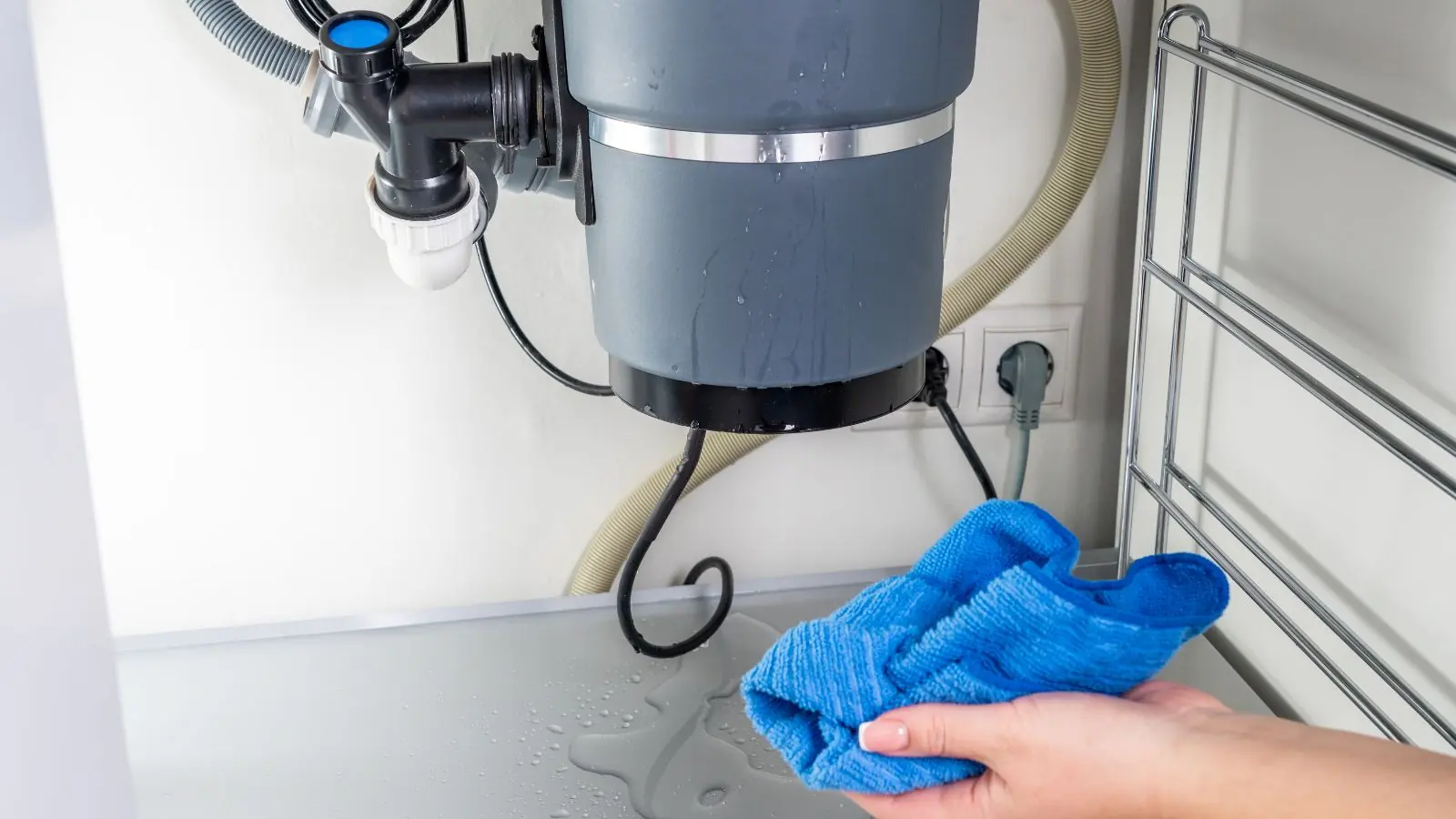
Small hoses cause outsized losses
Appliance leak water damage comes from supply hoses, drain lines, seals and internal tanks on washers, dishwashers, refrigerators and similar units. A burst washing machine hose can discharge steadily until the valve is closed. In Libertyville homes with finished basements and laundry rooms on upper floors, the water often travels down through ceilings before it is noticed.
Call (847) 368-7353 and describe which appliance leaked. We tailor the response to the likely water volume and the floors involved.
Which appliance leaks, and how
Washing machine
Rubber hoses harden over time. A split at the connector or a clogged drain pump can release the whole wash cycle.
Dishwasher
A door gasket, inlet valve or float switch fails and water spreads under cabinets into the subfloor.
Refrigerator or ice maker
A frozen or cracked supply line leaks slowly behind the unit and swells the floor under it.
Water softener or filter
Housing seals and drain tubes fail near the basement utility corner.
Hidden slow drips behave like a burst pipe in a wall, just at lower volume. Cabinets and trim hide the evidence for weeks.
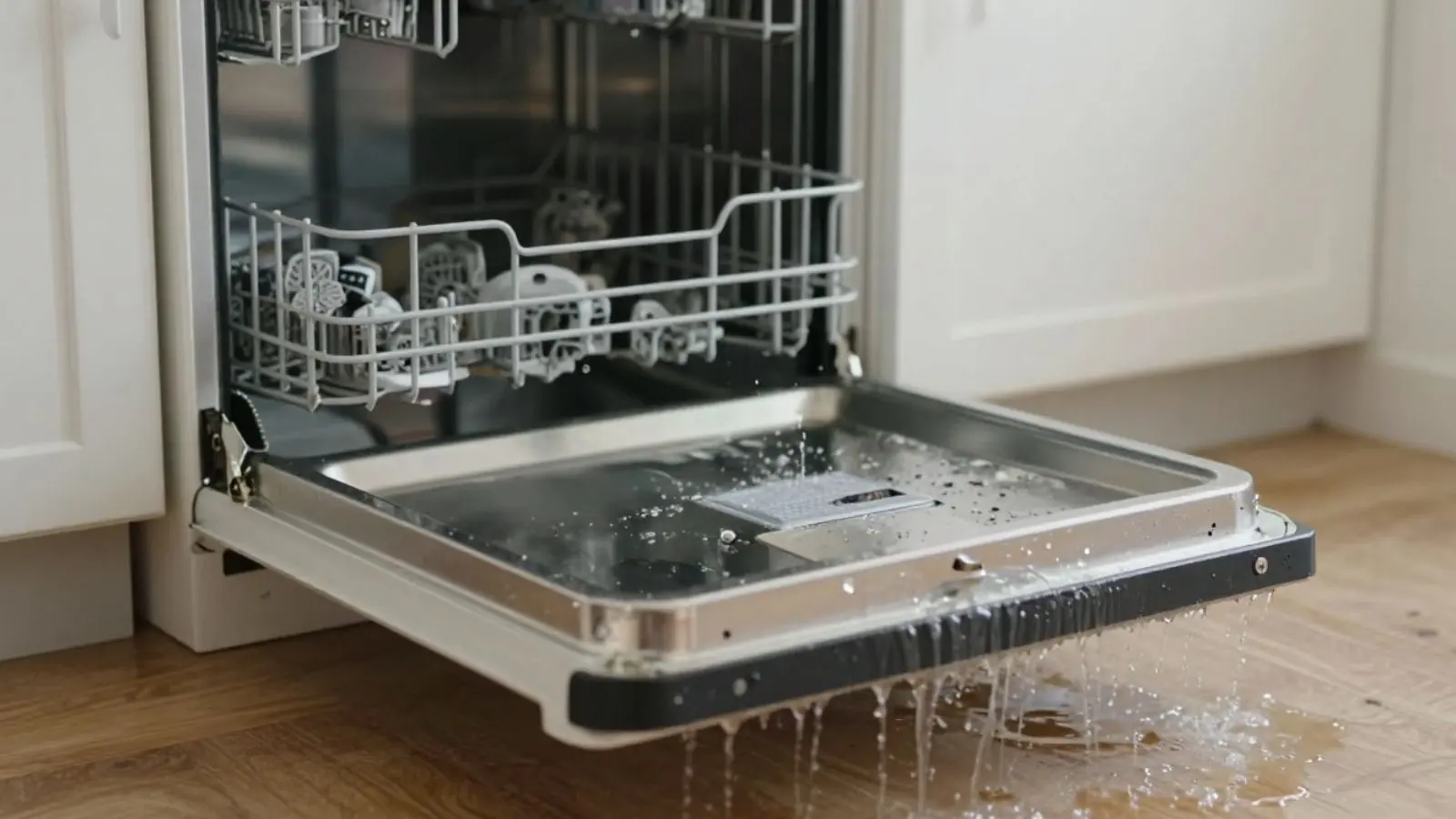
Clues that an appliance leak is bigger than the puddle
- Swollen laminate or vinyl planks near a dishwasher or fridge.
- A stain on the ceiling below a second floor laundry room.
- Musty smell from the cabinet under the sink.
- Floor that feels soft when you press near the appliance.
- Water on the floor after the appliance has been off for hours.
The surface may look fine. We use meters to check cabinet bases, subfloors and the cavity beneath tile.
How we handle an appliance flood
Isolate
Close the shutoff or unplug the unit if safe. A plumber or technician repairs the appliance.
Extract
Pull standing water from the floor and from under the appliance footprint.
Open the hidden spaces
Remove toe kicks and cabinet panels so air reaches wet cavities.
Dry in layers
Floor drying mats, air movers and dehumidifiers dry the material in order from the top down.
Clear to rebuild
Documentation and a repair scope go to you and, if you wish, your insurer.
What can be saved and what cannot
| Material | Often dried | Often removed |
|---|---|---|
| Vinyl plank. | Short wet time on a sealed subfloor. | Swelled seams or water below. |
| Tile. | Surface and grout are fine. | Water trapped under tile and underlayment. |
| Cabinet base. | Solid wood with a clean finish. | Particleboard that swelled. |
| Laminate. | Rarely. | Almost always, since seams absorb water. |
| Drywall behind appliance. | Dry within a day. | Soft or stained board. |
Cabinet and floor repair is covered in more depth on our kitchen water damage page.
What affects the total
- Floors affected, including any rooms below.
- Type and age of flooring.
- Cabinet removal and replacement.
- Drying days.
- Mold treatment, if the leak ran for a long time.
Insurance and appliance failures
Insurers generally cover resulting water damage from a sudden appliance failure but not the appliance itself. Gradual leaks are often excluded. Keep the failed hose or part, photograph the model plate, and save receipts. Warranty or home warranty plans may cover the appliance repair separately.
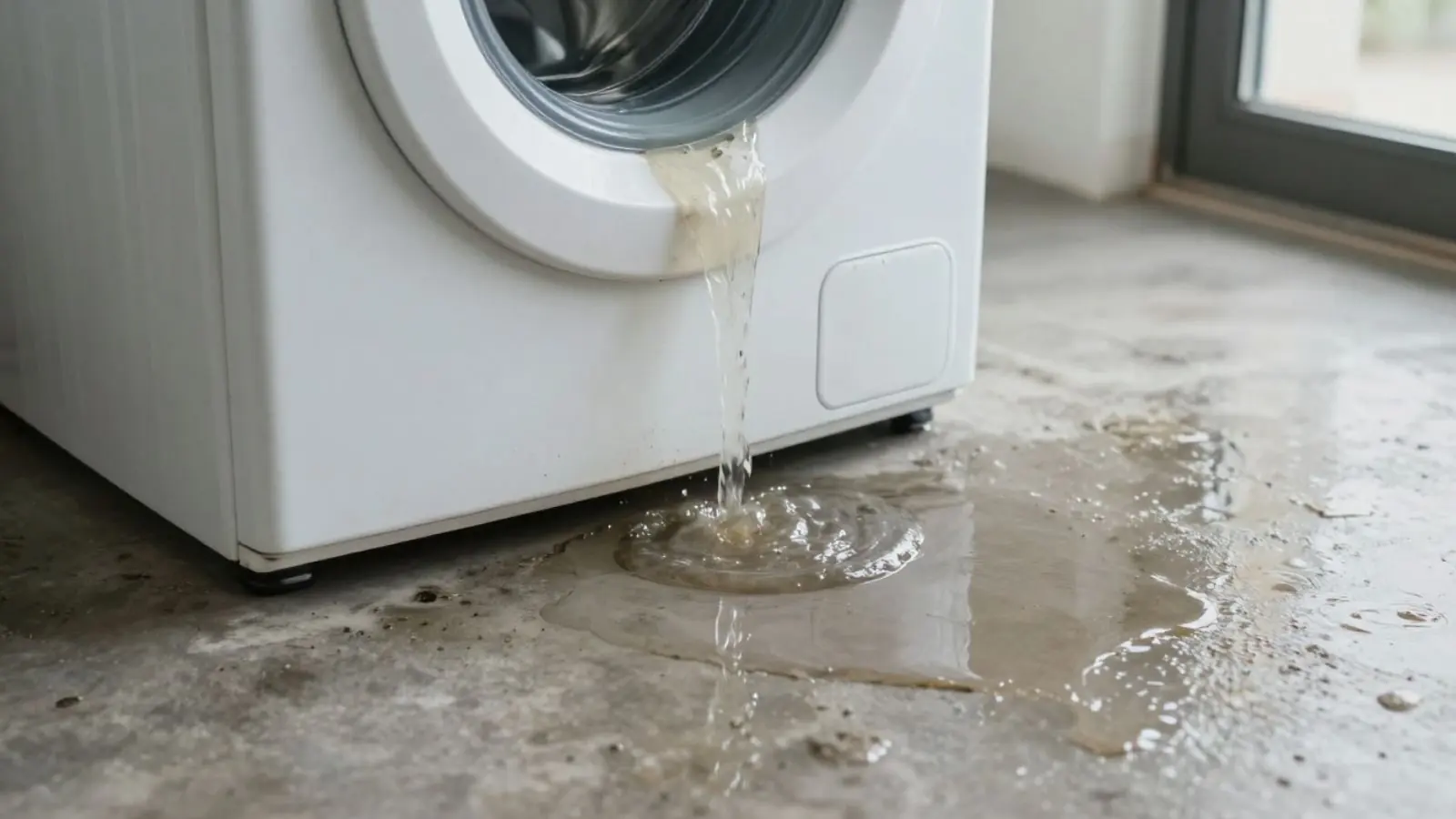
Hose and drain line habits that prevent repeat leaks
Replace rubber washer hoses with braided stainless lines and mark the install date with a label. Pull the washer out once a year and look at the connections, the drain standpipe and the floor behind it. A pan under the washer on an upper floor gives you a few minutes of warning, which is often enough to avoid a ceiling collapse below.
The standard behind the drying plan
Industry reference: the IICRC S500 standard is the published reference for professional water damage restoration. It defines water categories and drying classes, which is why a good scope names both and why moisture readings, not guesses, decide when drying is finished.
What to do before help arrives
These steps apply to most wet-area losses. If you smell gas, see sparking or hear buzzing from wet outlets, leave the area and call emergency services first.
- Turn off power to wet circuits at the breaker only if the panel is dry and you can reach it safely.
- Stay out of rooms with standing water if outlets, cords or appliances are submerged.
- Stop the water source if you can do it safely, then move valuables up and out of the wet area.
- Take dated photos and video before anything is moved.
- Do not use a household vacuum on standing water or run fans through wet electrical cords.
- Keep children and pets out of the wet area until the crew gives guidance.
Questions we hear
Do you handle appliance leak emergencies at night or on weekends in Libertyville?
Call (847) 368-7353 and describe what is happening. The line tells you what response to expect for your address and conditions, including at night or on weekends.
Do I replace the hose or the whole appliance?
Most hose failures need a new hose, ideally braided stainless. If the leak came from the drum, pump or door seal, the technician advises on repair or replacement.
Can a slow leak behind a fridge cause mold?
Yes, after enough time. We test for moisture and, if mold is present, refer to our mold remediation service.
Will insurance cover the washer itself?
Usually not. Coverage typically applies to the resulting water damage, not the appliance. Check your policy and any home warranty.
How do I prevent another leak?
Replace rubber hoses every few years, install a drain pan and consider an automatic shutoff valve for the washer.
Is a small puddle worth a call?
If it keeps coming back, yes. Small recurring leaks often wet a larger area underneath, and drying early costs less than repairs later.