
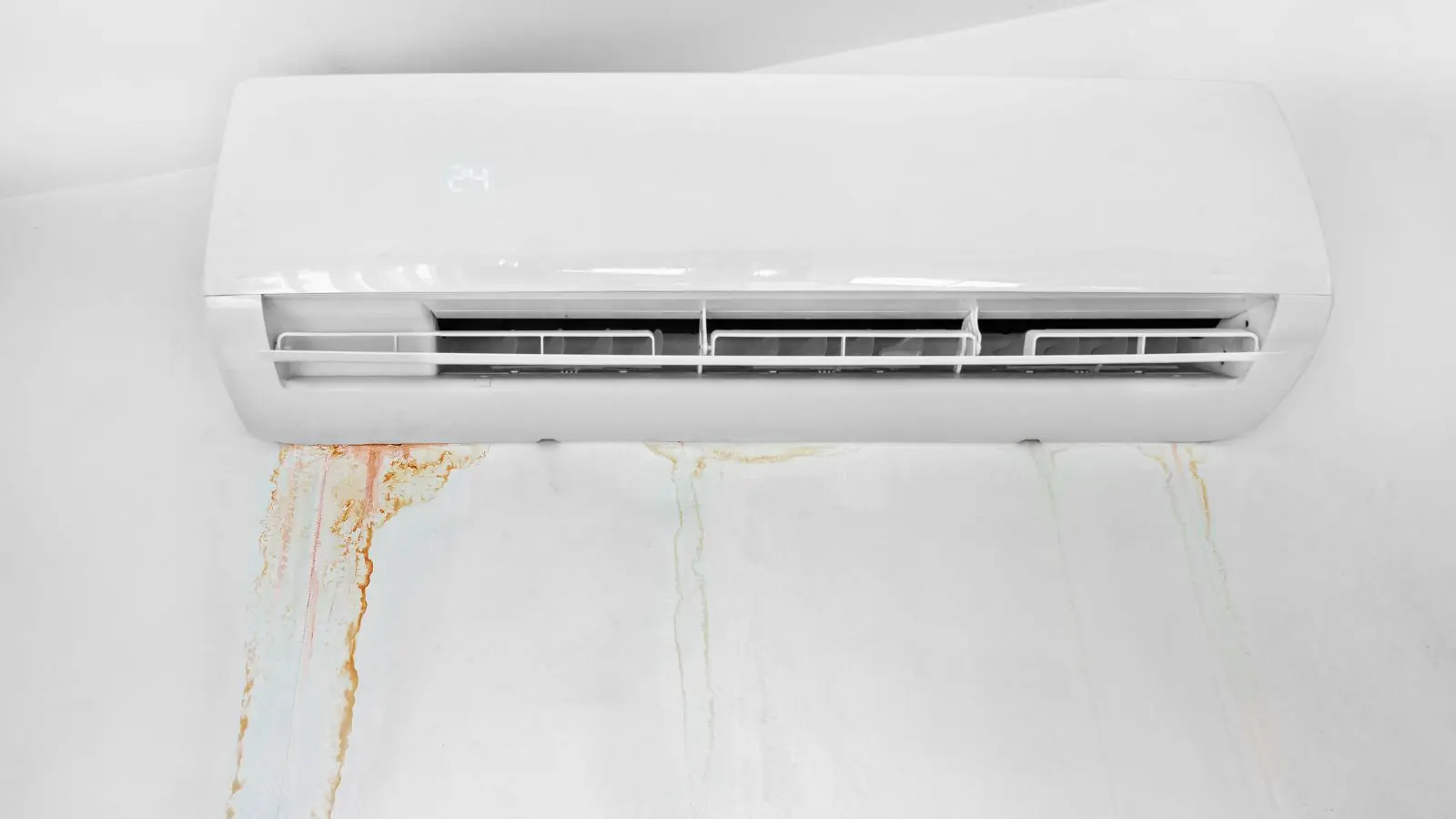
Why your air conditioner can leak indoors
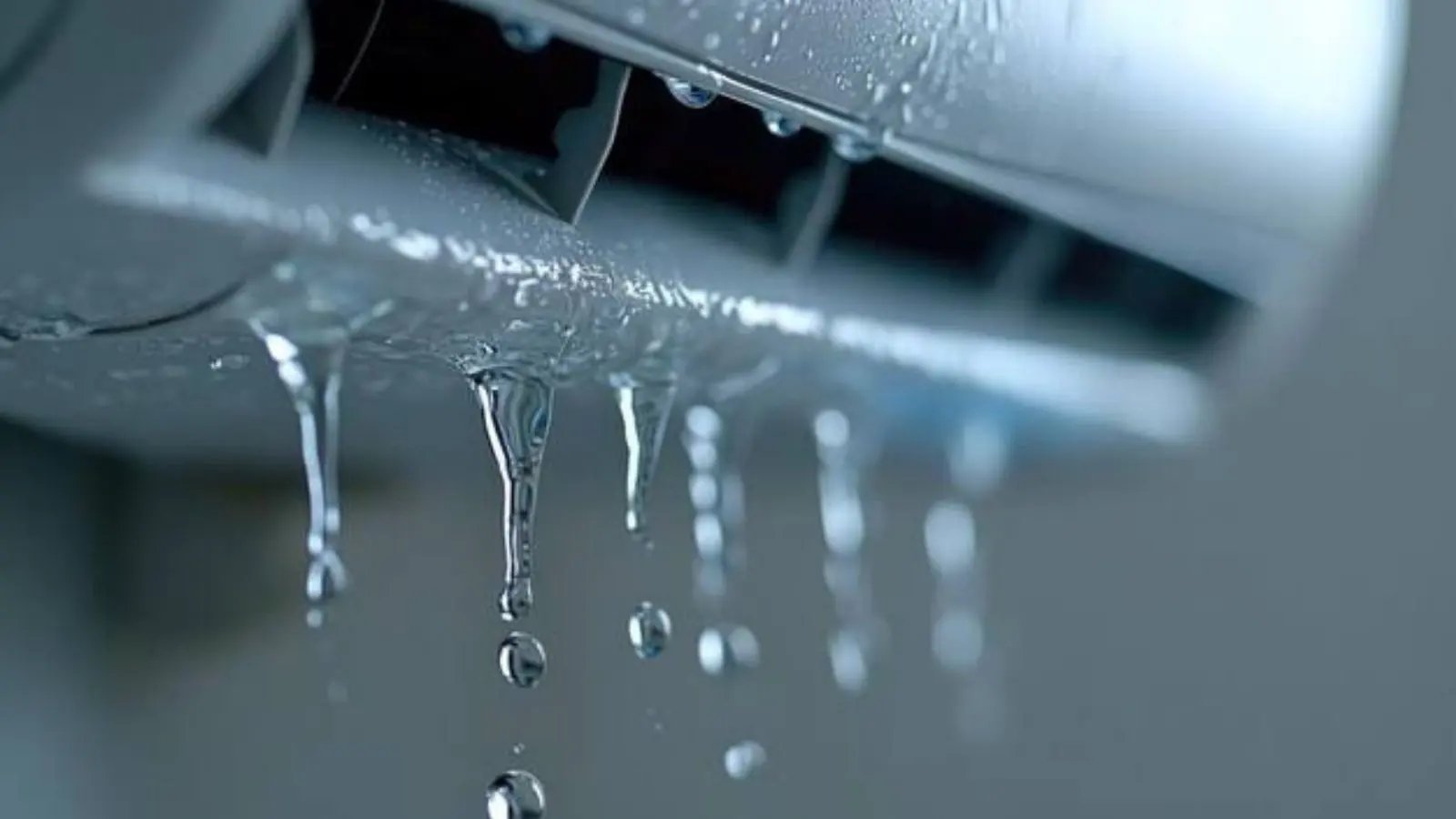
AC leak water damage is moisture released inside the home by the cooling system, usually from a clogged condensate drain, a cracked pan or a frozen evaporator coil. In summer, a typical system removes many gallons of humidity from the air each day. When the path to the drain clogs, that water overflows onto insulation, ceilings and floors.
If your system is off and water remains, call (847) 368-7353 so we can set up drying and scope the repair.
Where the water goes in Libertyville homes
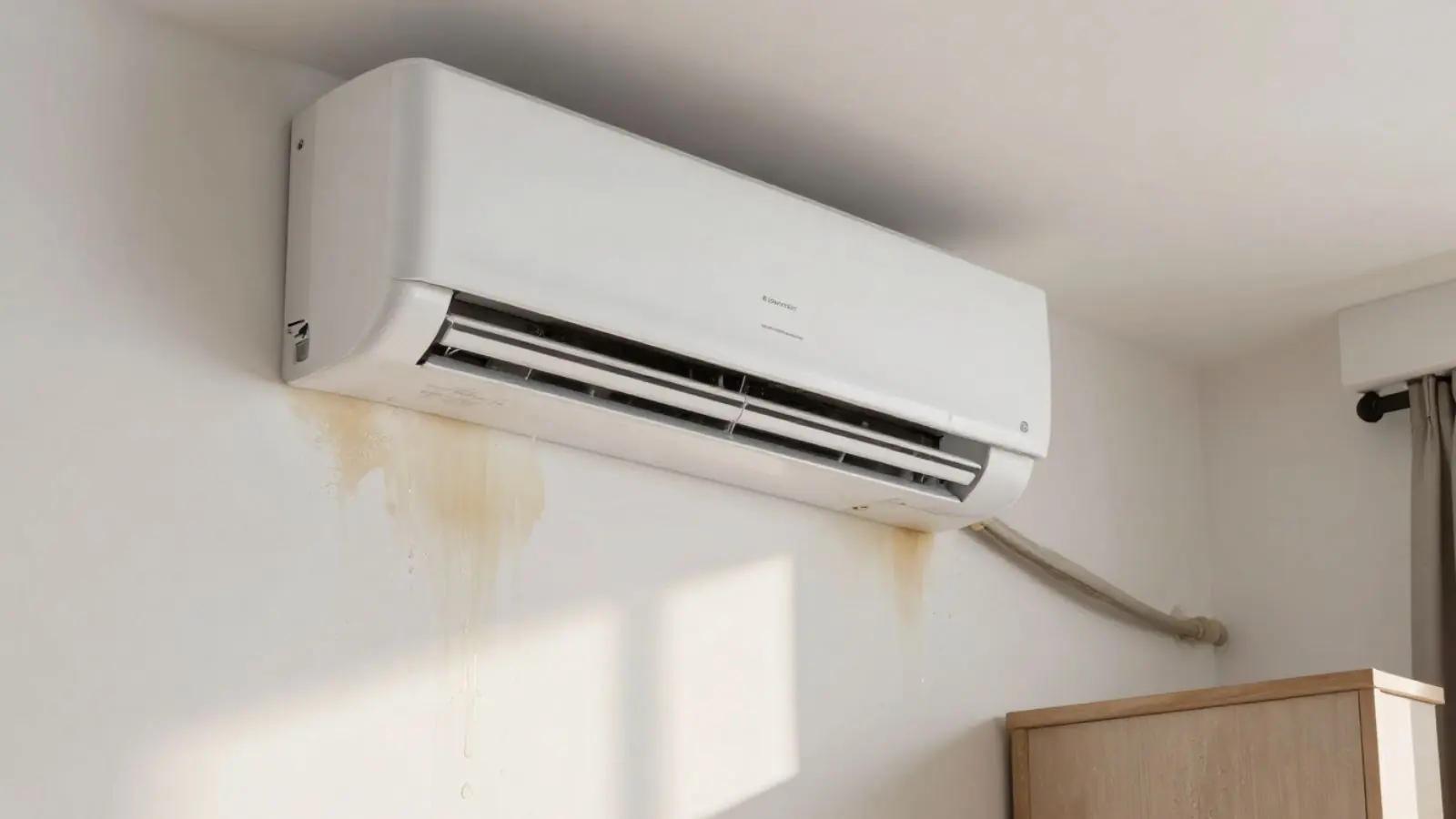
Air handlers sit in basements, closets and attics. A leak from a basement unit seeps into the floor and nearby walls. A leak from an attic unit saturates insulation and stains the ceiling below, as covered on our ceiling water damage repair page.
Because the water is condensation, it often looks clean at first. Over a season it carries dust, algae and rust, and leaves brown staining.
Clues that the AC is leaking
- Brown stains on a ceiling below an attic air handler.
- Water in the secondary drain pan.
- Ice on the evaporator coil or refrigerant line.
- A musty odor each time the system starts.
- Damp insulation around the duct plenum.
- Warped drywall in a closet housing the unit.
Drying and repair approach
Power down the system
We ask you to switch the thermostat and breaker off before work in the area.
Clear the drain
An HVAC technician flushes the condensate line and checks the pan. We coordinate timing.
Remove wet insulation
Insulation and soft drywall below the unit are cut out.
Dry
Air movers and a dehumidifier run until framing and subfloor meet the dry goal.
Rebuild
Drywall, paint and trim are replaced after the cavity passes its readings.
Repair or replace the damaged parts
| Damage | Typical action | Notes |
|---|---|---|
| Wet blown-in insulation. | Remove and replace. | Compressed insulation holds water. |
| Stained ceiling drywall. | Cut out or re-board. | Depends on how long it was wet. |
| Rusted drain pan. | Replace. | HVAC technician handles this. |
| Damp closet wall. | Dry in place. | If drywall remains firm. |
Costs and scheduling
Because most AC leaks are not floods, scheduling is usually a prompt visit rather than an urgent response. The scope depends on how long the leak ran, whether drywall must be replaced and whether the HVAC repair is part of the same visit. We list each in writing before work starts, and we can coordinate with your HVAC contractor.
For related problems, see our structural drying page for how we confirm dry framing.
Insurance and the condensate leak
Some policies exclude gradual leaks and maintenance failures such as a clogged drain. Others treat a sudden overflow as covered. Photograph the pan, the stain and the model label before cleanup, and ask your agent how the policy handles HVAC water. We provide moisture logs and the scope.
Keeping the condensate line clear next season
Most AC leaks are preventable with a few minutes of maintenance each spring. The condensate line is a small pipe that slowly clogs with algae and dust, and a technician can flush it in minutes. A float switch in the drain pan shuts the system off when water rises, which turns a flood into a nuisance.
- Have the condensate line flushed before the cooling season starts.
- Replace air filters on schedule so the coil does not freeze.
- Look at the secondary pan for water or rust every few months.
- Install a float switch on the pan or the drain line.
- Insulate refrigerant lines in attics and crawl spaces to limit sweating.
If you see a stain after the system has been working hard, shut it off, call the HVAC technician and then call us about drying.
The standard behind the drying plan
Industry reference: the IICRC S500 standard is the published reference for professional water damage restoration. It defines water categories and drying classes, which is why a good scope names both and why moisture readings, not guesses, decide when drying is finished.
What to do before help arrives
These steps apply to most wet-area losses. If you smell gas, see sparking or hear buzzing from wet outlets, leave the area and call emergency services first.
- Turn off power to wet circuits at the breaker only if the panel is dry and you can reach it safely.
- Stay out of rooms with standing water if outlets, cords or appliances are submerged.
- Stop the water source if you can do it safely, then move valuables up and out of the wet area.
- Take dated photos and video before anything is moved.
- Do not use a household vacuum on standing water or run fans through wet electrical cords.
- Keep children and pets out of the wet area until the crew gives guidance.
Questions we hear
Why is my air conditioner leaking water inside?
The usual cause is a clogged condensate drain line or a pan that has cracked. A frozen evaporator coil can also melt and overflow the pan.
Can an AC leak cause mold?
Yes, if insulation and drywall stay damp. The earlier the area is dried, the lower the risk. Our mold remediation page explains the next step if growth is found.
Is this an emergency?
It is urgent if the ceiling is bulging or water is near electrical equipment. For a slow drip, a prompt visit is usually enough.
Do I need an HVAC technician as well?
Yes. We dry and repair the building. A heating and cooling technician fixes the drain, pan or coil that caused the leak.
How often should the drain be flushed?
Many technicians recommend flushing the condensate line at least once a year before the cooling season. A float switch can shut the system off if the pan fills.
Will my attic insulation need replacement?
If it is compressed and wet, yes. Dry insulation above the leak can stay.