
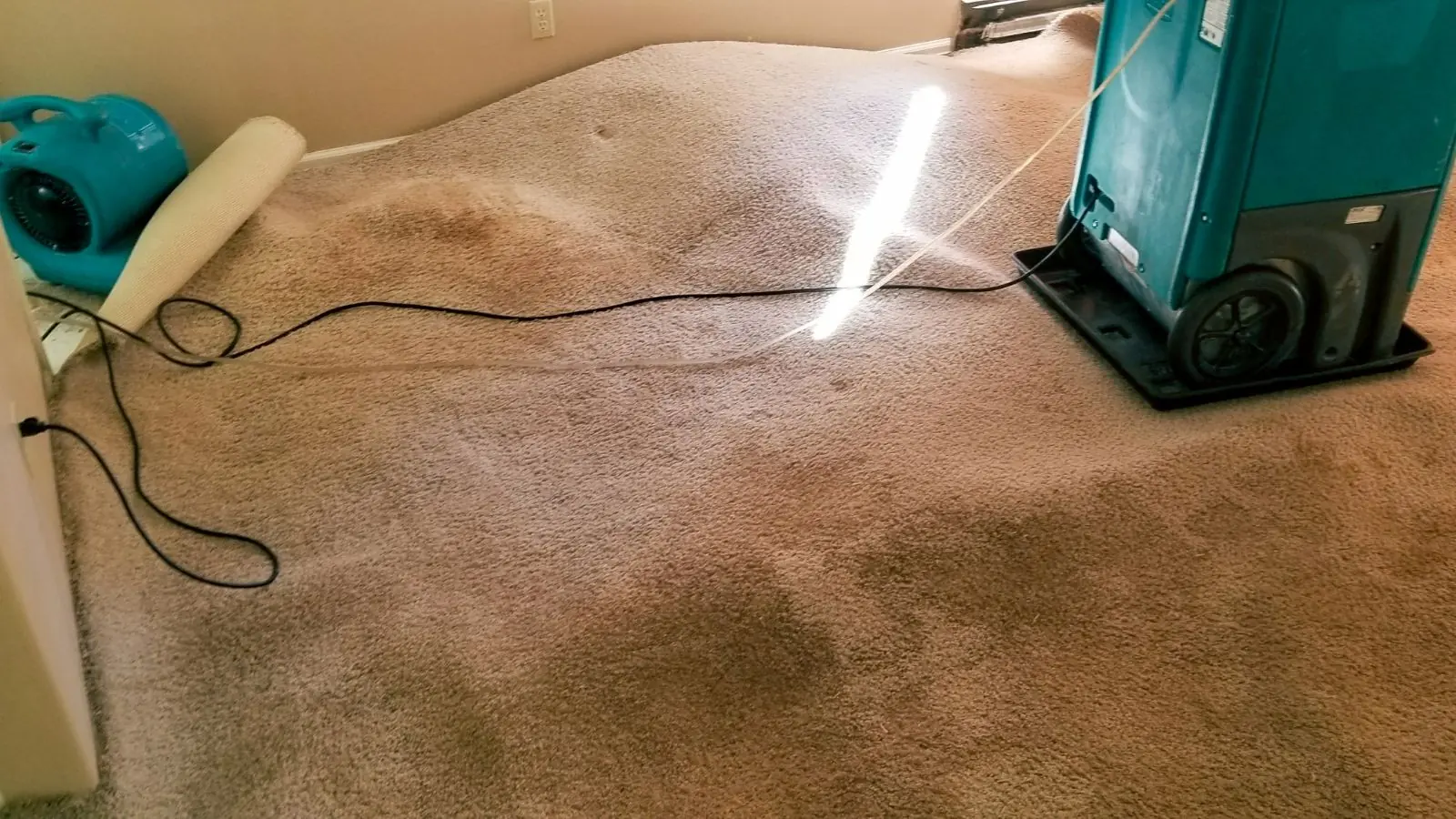
Carpet, pad and what sits under both
Carpet water damage restoration is the extraction, drying and cleaning of carpet, pad and tack strip after water reaches them. Carpet is only the visible layer. The pad underneath holds most of the water, and the subfloor below it can stay wet for days. In Libertyville basements and bedrooms, that hidden layer is what causes odor and mold later.
Call (847) 368-7353 soon after the spill so we can decide whether to dry in place or lift the carpet.
How the water source decides the plan
| Source | Carpet | Pad |
|---|---|---|
| Supply line or clean leak, caught early. | Often dried in place. | Often dried or replaced. |
| Appliance or tub overflow. | Often dried with extraction. | Often replaced. |
| Storm or groundwater. | Case by case. | Usually replaced. |
| Sewage or flood water. | Discarded. | Discarded. |
See our pages on flood damage and sewage backup for contaminated cases.
Telltale signs of wet carpet
- Squishy or cold feel underfoot.
- Musty odor that appears after the surface looks dry.
- Wrinkling or bubbling across the room.
- Dark spots along baseboards.
- Stains that return after cleaning.
The drying process for carpet
Extract
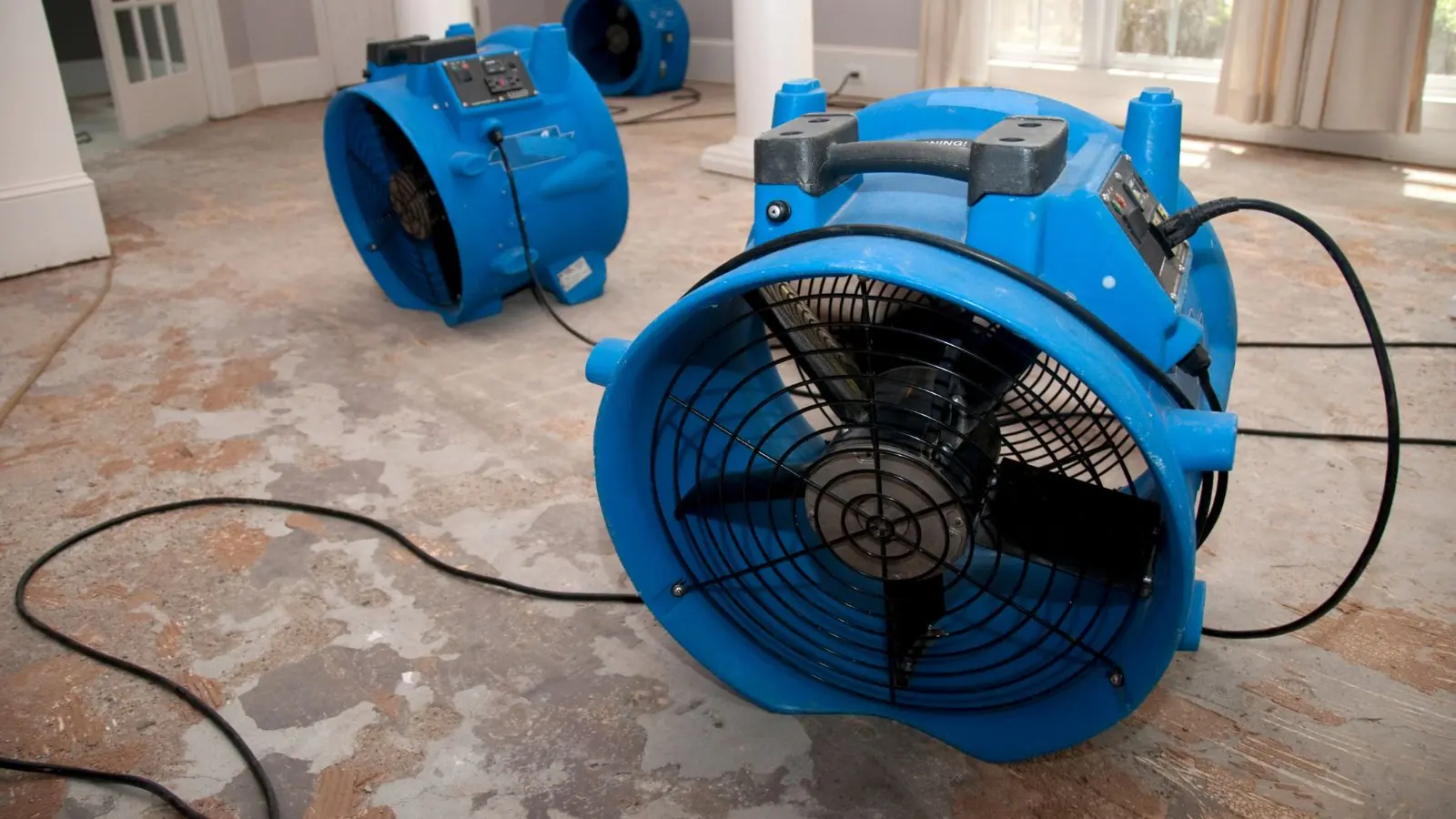
Weighted tools pull water from the carpet and pad.
Lift and float
Corners are released and the carpet is floated over air movers to dry both sides.
Treat the pad and subfloor
Pad is removed if it cannot dry. The subfloor is treated and dried.
Dehumidify
Dehumidifiers hold the room at safe humidity.
Reinstall or replace
Dry carpet is re-stretched on new pad.
Dry in place, lift or replace
The best option depends on the water and the carpet. Dry in place works with clean water and quick action. Lift and float is used when the pad is damp but the carpet is healthy. Replacement is chosen when water was contaminated or the carpet stayed wet for days.
Basement carpet raises the stakes because concrete stays damp. Read our basement water damage page for details.
What affects the price
- Square footage of carpet and whether it is glued or stretched.
- Pad type and condition.
- Water category.
- Dry time.
- Whether carpet must be replaced and matched.
Insurance and carpet claims
Insurers pay attention to the date, the source and the moisture records. Photograph the carpet and pad, keep any cut samples and note the time of discovery. Ask your agent about depreciation on older carpet.
Carpet fibers and construction matter
Not every carpet reacts to water the same way. The fiber, the backing and the pad underneath all affect whether it can be saved.
Nylon and polyester
Synthetic fibers do not absorb much water themselves. The backing and pad hold the moisture, so drying focuses there.
Wool and natural fibers
Absorb more, may shrink or stain and need careful handling and a quick response.
Berber and looped styles
Loops can snag when lifted, so careful floating is required if the carpet is to be reused.
Glued down commercial carpet
Adhesive holds moisture, and removal is often needed to dry the slab.
Why a carpet can smell after it looks dry
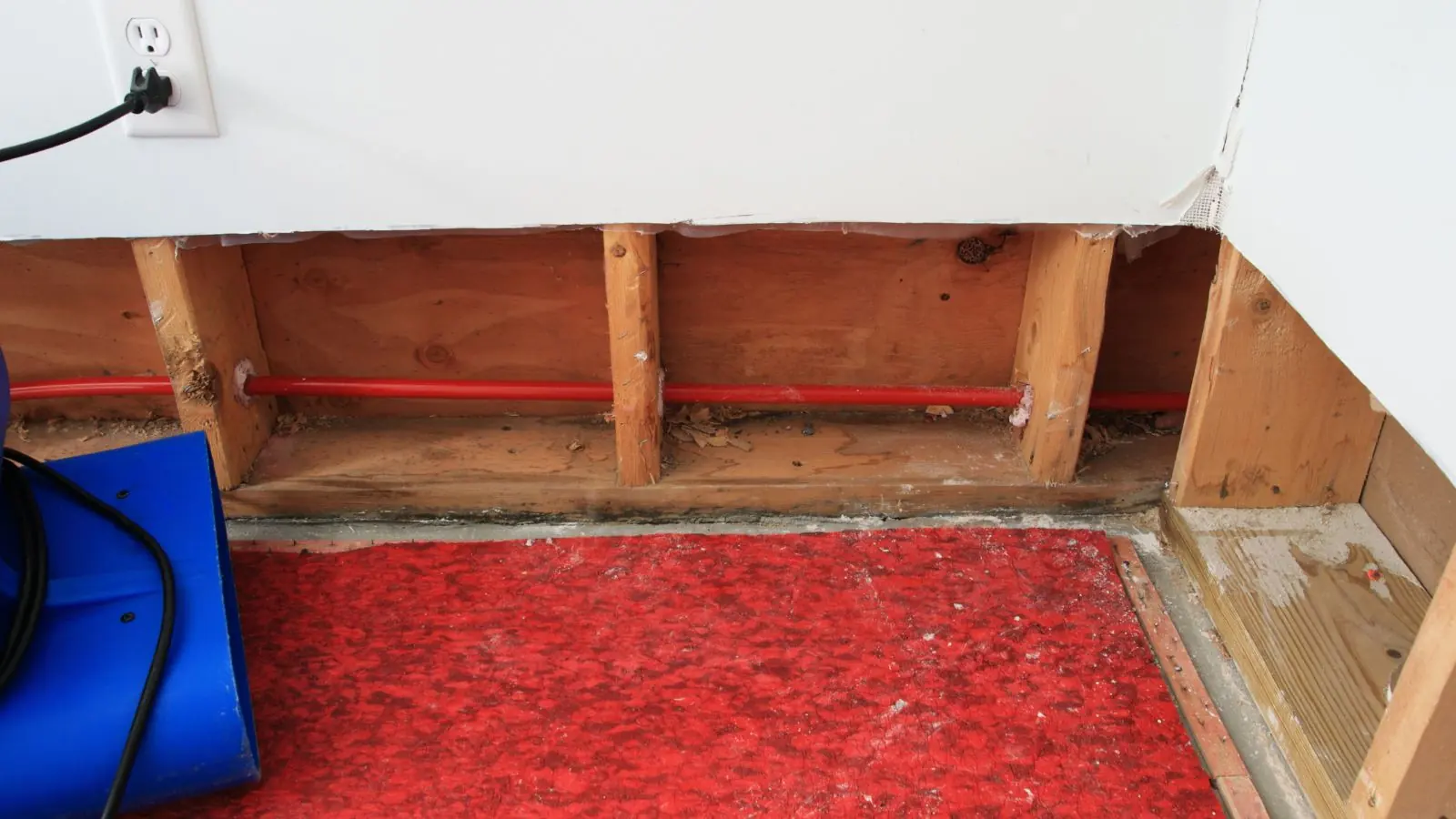
Odor is a sign that moisture or bacteria remain somewhere in the layers. It may come from the pad, the tack strip or the subfloor, even when the carpet surface passes a touch test. A moisture meter helps find the source. Deodorizing can mask a problem, so we prefer to confirm dryness first and clean afterward.
If the smell persists after a clean-water event, it often means the pad was dried too slowly. Replacing the pad and drying the subfloor again usually solves it. For contaminated water, the answer is replacement, as described on our sewage backup page.
Carpet over concrete versus carpet over wood
The surface under the carpet changes the drying plan. Concrete holds water and releases it slowly, which is why basement carpet needs dehumidifiers and patience. A wood subfloor can swell, stain or warp if it stays wet. In both cases we check the layer below before we reinstall anything, and we use structural drying methods to prove it.
The standard behind the drying plan
Industry reference: the IICRC S500 standard is the published reference for professional water damage restoration. It defines water categories and drying classes, which is why a good scope names both and why moisture readings, not guesses, decide when drying is finished.
When to treat it as an emergency
Treat the loss as an emergency when water is still entering, when it has touched electrical outlets or appliances, or when the water may be contaminated. Stop the source if it is safe to do so, keep people and pets out of the wet area, and call for help before the materials start to dry out unevenly.
Questions we hear
Can wet carpet be saved?
Often, if the water was clean and it is dried within a day or two. Contaminated water means replacement.
Why is the pad usually replaced?
Pad acts like a sponge and is hard to dry. It is inexpensive compared with the risk of mold.
How long does carpet take to dry?
Usually two to four days with equipment. Thicker pad takes longer.
Will the carpet smell?
Dry carpet should not smell. If odor persists, moisture remains somewhere.
Can you clean carpet after drying?
Yes. Deodorizing and cleaning is often done after drying is confirmed.
What about carpet over concrete?
Concrete releases moisture slowly. We test the slab before the carpet goes back.